Why Does Your Car Get Dirty So Fast After Washing & How to Keep It Clean Longer?
Sound familiar? You spent two hours meticulously washing your car and bringing the paintwork to a flawless shine, only to have it covered in a layer of gray dust after a few hours of city driving—and the very first puddle leaves stubborn dirty streaks.
Poor roads are rarely the only culprit. In 90% of cases, rapid re-soiling is a direct result of improper washing and finishing techniques. Chemical Guys experts have broken down the 4 main mistakes that turn your car's body into a "dust magnet" and selected specific tools to keep it clean for weeks ahead.
Reason 1. Electrostatic Charge During Drying
- Common Mistake: Wiping a freshly washed vehicle dry over bare clear coat using an ordinary cloth or microfiber towel without any drying aids, rubbing the panels vigorously.
- Expert Explanation (Why It Hurts): Vigorous friction of dry fabric against the paintwork generates a strong triboelectric effect—the surface accumulates a static electrical charge. Metal and clear coat literally become a magnet for fine road dust, pollen, and sand floating in the air. The moment you pull out of the garage or driveway, static electricity immediately pulls dry dirt onto the freshly washed finish. Additionally, dry friction without lubrication creates micro-scratches and swirl marks.
- The Right Solution & Tool: Never dry bare paint without lubrication and anti-static protection. Mist Chemical Guys After Wash drying aid onto the wet body before wiping (it creates a slick barrier and blocks static buildup) and collect the water with a premium twisted-loop Woolly Mammoth Microfiber Dryer Towel. For final wipe-downs on dry paint, use anti-static quick detailers like Extreme Slick Streak Free Polymer Detailer or Speed Wipe—their polymers reduce surface static charge by up to 75%, repelling dry dust.

Hydrophobic drying aid cream. Creates a slick lubrication barrier between your towel and paint, preventing scratches and static.
Shop Now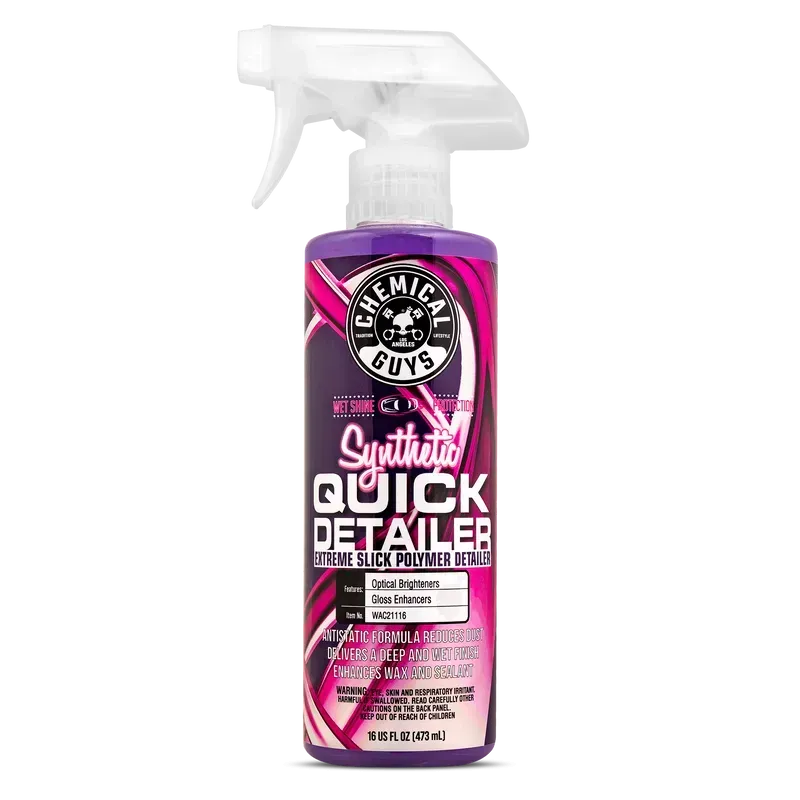
Synthetic polymer quick detailer with an anti-static formula. Delivers extreme slickness and a deep "wet" mirror shine.
Shop Now
Cherry-scented anti-static quick detail spray. Reduces dust attraction by up to 75% and instantly refreshes high-gloss shine.
Shop NowReason 2. Harsh Touchless Foam & Surfactant Residue
- Common Mistake: Washing the car in a single stage using harsh alkaline touchless foam (especially at self-serve car washes), hoping high-pressure water will rinse everything away completely.
- Expert Explanation (Why It Hurts): Cheap high-alkaline foam (pH 11–13) cannot fully remove static traffic film without mechanical agitation, yet it dries out the clear coat and leaves behind an invisible sticky film of surfactants and hard water minerals. This unwashed micro-layer has high adhesion: fresh dust and exhaust fumes literally glue themselves to the body within the first few minutes of driving.
- The Right Solution & Tool: Always perform a two-stage wash using a pH-neutral shampoo packed with slick lubricants. Use Chemical Guys Mr. Pink Super Suds for gentle, regular hand washing, or upgrade to HydroSuds Ceramic Car Wash Soap to simultaneously clean the exterior and infuse the paint with SiO2 nanoparticles that create a slick, water-repellent finish and rinse clean without sticky residue.

pH-neutral car wash shampoo with thick suds and slick lubricants. Gently lifts static traffic film without stripping protective wax.
Shop Now
SiO2-infused ceramic wash soap. Rinses completely clean without sticky residue and boosts hydrophobic water beading.
Shop NowReason 3. Open Pores of Unprotected Clear Coat
- Common Mistake: Leaving the paintwork "naked" after washing, assuming that waxes, sealants, and ceramic coatings are only meant for show-car shine.
- Expert Explanation (Why It Hurts): Under a microscope, automotive clear coat isn't perfectly flat—it has a porous, uneven structure filled with microscopic craters. When the clear coat isn't sealed with protection, dirty water droplets, road tar, chemicals, and oily soot get trapped inside these micro-imperfections. Water doesn't roll off; instead, it sheets across the panel (hydrophilic effect), dries up, and leaves heavy dirt spots.
- The Right Solution & Tool: Seal the paint pores to create high surface tension and a self-cleaning hydrophobic effect. For instant protection after a wash, apply Chemical Guys Activate Instant Spray Sealant—its dual-phase formula blends synthetic polymers and carnauba wax to seal microscopic paint pores in one step and create a durable weatherproof barrier. For deep protection lasting up to 1 year, apply HydroSlick Intense Gloss SiO2 Ceramic Coating HyperWax (Important: after applying HydroSlick, keep the vehicle in a dry garage or detailing studio for 24 hours to allow the formula to fully cure on the paintwork).
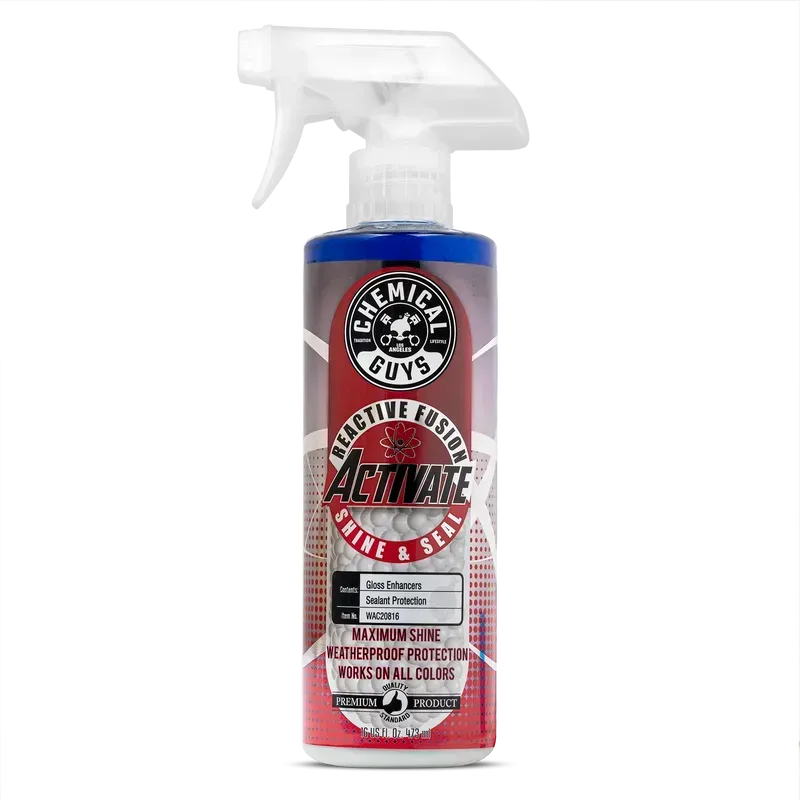
Dual-phase spray sealant with carnauba and polymers. Instantly seals paint pores for deep gloss and water-repellent protection.
Shop Now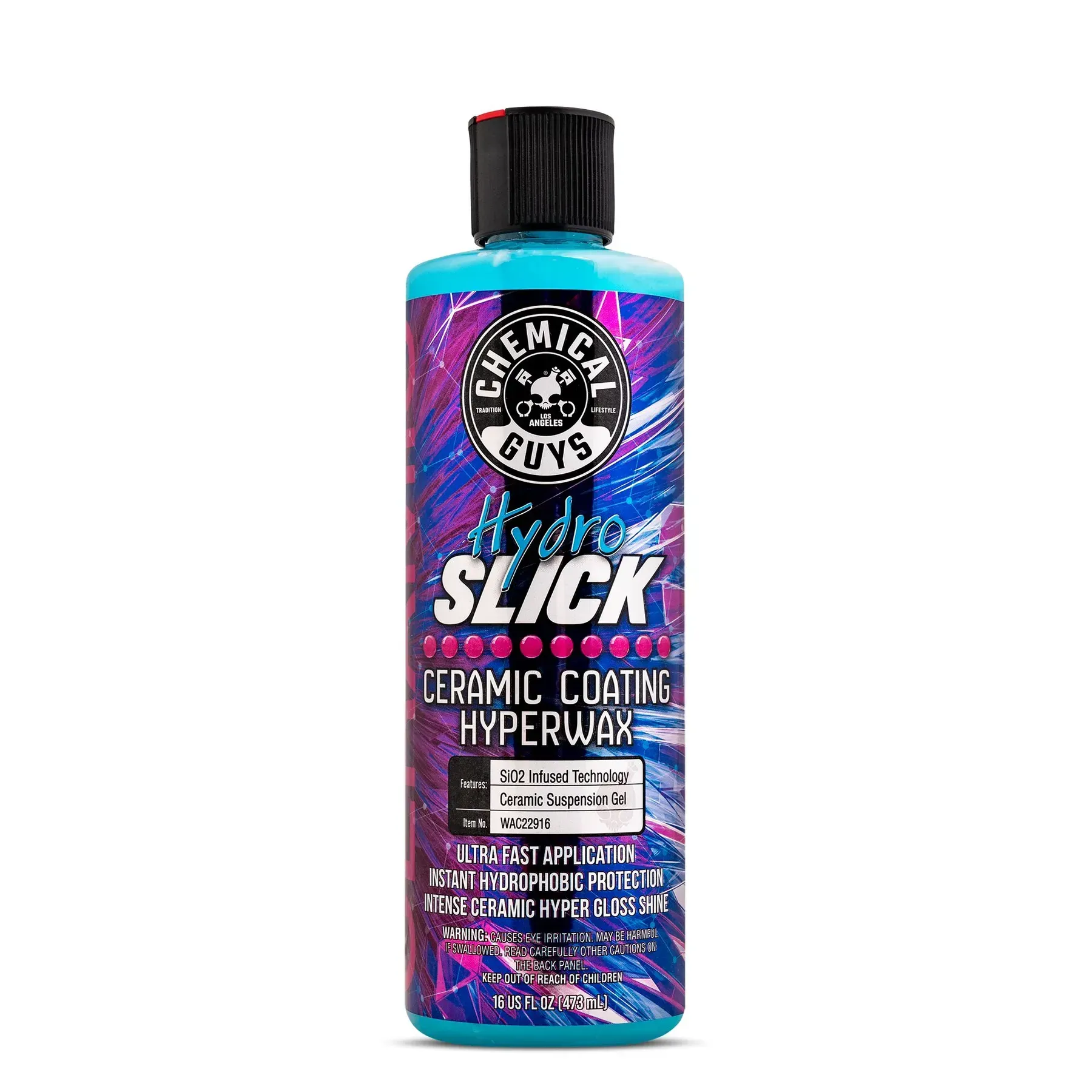
SiO2 ceramic suspension gel HyperWax. Creates an ultra-slick shield and intense hydrophobic water beading for up to 12 months.
Shop NowReason 4. Ignoring Embedded Contaminants (Lack of Decontamination)
- Common Mistake: Washing the car with soap alone for years without performing deep chemical and mechanical decontamination to remove embedded metal particles and tree sap.
- Expert Explanation (Why It Hurts): Over time, sintered brake dust (iron particles), tree sap, road tar, and industrial fallout fuse into the clear coat. Even after a thorough wash, such paint feels like sandpaper to the touch. These microscopic "hooks" snag water and dirt on the panels, preventing water droplets from rolling off and stopping any wax or sealant from properly bonding to the surface.
- The Right Solution & Tool: Perform deep paint decontamination every 3–6 months. First, dissolve embedded brake dust on a pre-washed exterior using Chemical Guys DeCon Pro Iron Remover, then pull out remaining stubborn grit using the Chemical Guys OG Clay Bar paired with Clay Luber synthetic lubricant. A glass-smooth surface physically prevents dirt from grabbing onto the clear coat.

Color-changing pH-balanced fallout remover. Safely dissolves baked-on brake dust and embedded iron particles on paint and wheels.
Shop Now
Elastic synthetic detailing clay bar that pulls tree sap, tar, and industrial fallout from paint pores for a mirror-smooth finish.
Shop Now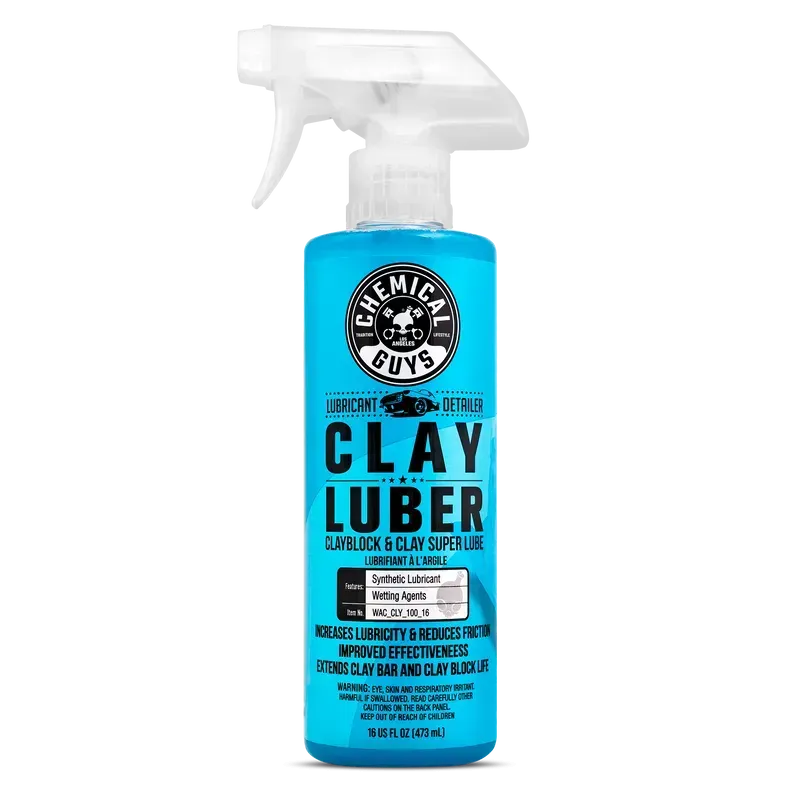
Synthetic wetting agent and lubricant for clay bars. Reduces friction to a minimum, protecting paintwork from marring and scratches.
Shop NowFrequently Asked Questions (FAQ)
1. Why does a black car get dirty faster than a white or silver one?
Physically, dark and light vehicles accumulate the exact same amount of dust. However, dark paint heats up much faster in the sun (accelerating water droplet evaporation and leaving mineral water spots), while light-gray road dust creates maximum visual contrast against a glossy black surface. For dark cars, using an anti-static detailer like Speed Wipe or Black Light Hybrid Radiant Finish is essential.
2. How does the self-cleaning effect work in the rain?
When your exterior is protected with a sealant or coating (such as Activate Instant Spray Sealant or HydroSlick) and maintained with HydroSuds shampoo, it creates a high water contact angle (hydrophobic effect). Water doesn't sheet flat across the panel; instead, it forms tight beads. As you drive, airflow pushes these beads off the body, picking up and carrying away fresh dust and loose dirt particles.
3. Can I use a quick detailer on a slightly dusty car between washes?
Only if the car has a very light layer of dry dust (for example, after sitting overnight in an indoor garage). In that case, mist Chemical Guys Speed Wipe or EcoSmart waterless wash generously and wipe gently in one direction with a plush microfiber towel using zero pressure. If there is sand or dried mud after rain, wiping without a proper two-stage wash will scratch the clear coat.
4. How often should I refresh the protective layer to keep my car cleaner?
Quick detail sprays and drying aids (After Wash, Speed Wipe) should be used during every wash (every 1–2 weeks). Polymer spray sealants like Activate Instant Spray Sealant, traditional carnauba waxes, and sealants (Butter Wet Wax, JetSeal) should be refreshed every 1–6 months, while SiO2 ceramic products in the Hydro line maintain surface protection for 6–12 months.