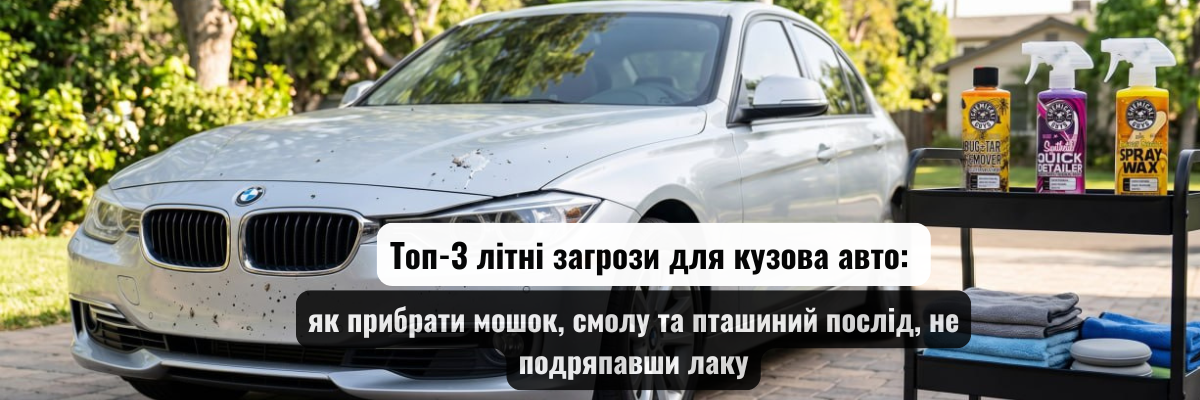
Top 3 Summer Hazards for Your Car's Bodywork: How to Remove Bugs, Tar, and Bird Droppings Without Scratching the Clear Coat
Summer is the perfect season for long road trips and weekend getaways. However, every highway drive leaves unpleasant "souvenirs" on your vehicle. Scorching asphalt, buzzing insects, and birds can quickly turn your hood, bumper, and roof into a literal battlefield.
The biggest mistake most drivers make is attempting to scrub these contaminants away using plain water and a harsh sponge. The result is always the same: a web of fine swirl marks and dulled paintwork. Let’s dive into how to professionally and safely tackle the three main enemies of your car's exterior during the summer months.
1. Bug Splatter: The Acid Eating Into Your Clear Coat
After an evening drive outside the city, the front end of your car is usually covered in a layer of smashed insects. This isn't just an aesthetic issue; their remains contain highly aggressive organic acids. If left on the bodywork under the baking sun for a few days, this acid will etch into the upper layer of the clear coat, leaving dull stains that can eventually only be fixed with mechanical polishing.
How to handle it correctly: The secret to success is chemical breakdown, not mechanical friction. Never try to scrape off dried-on bugs.
-
Cool down the surface. Never apply chemicals to a hot hood. Move the car into the shade or cool the panels down with water first.
-
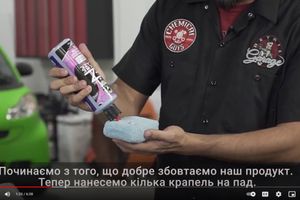
Use a specialized product. Apply a dedicated cleaner (such as a specialty shampoo or spray from the Chemical Guys Bug & Tar Remover line) directly onto the affected areas.
-
Let the formula work. Leave the product on for 1–2 minutes. The enzymes and surfactants will safely soften the organic proteins.
-
Rinse without pressure. Power-wash the residue away with water or gently wipe it down using a premium microfiber towel (ideally one featuring an identical pile length on both sides to evenly distribute pressure and trap dirt without any risk of scratching).
2. Bird Droppings: A Ticking Time Bomb
This is arguably the most hazardous type of everyday contamination for automotive paintwork. Bird droppings contain extremely high levels of uric acid (with a pH ranging from 3 to 4.5). When the metal heats up under the sun, the clear coat expands, allowing the acid to penetrate deeper. As the bodywork cools down, the paint contracts, literally locking the damage inside.
How to handle it correctly: Speed is your best friend here. You need to clean it up the moment you spot it.
-
Always keep a quick detailer handy. A detailer spray (such as Extreme Slick Streak-Free Polymer Quick Detail Spray, Speed Wipe, or Blazin' Banana Natural Carnauba Spray Wax) along with a clean microfiber towel should live in every driver's trunk.
-
Liberally soak the spot. Never rub dry droppings! Spray the quick detailer generously and place a damp microfiber towel over the spot for 30–60 seconds to completely rehydrate and loosen the debris.
-
Use the "pinch" technique. Gently lift the debris upward and inward toward the center of the spot. Avoid wiping it across the paint, as birds frequently swallow small pebbles and sand, which act like sandpaper against your clear coat.
3. Road Tar and Bitumen: Black Spots on a Clean Car
In high heat, asphalt begins to melt, and the tires of passing or oncoming traffic fling tiny droplets of bitumen onto your doors, fenders, and side skirts. They harden rapidly, turning into stubborn black specks that regular car shampoo simply cannot wash away.
How to handle it correctly: Tar requires delicate solvents that dissolve the petroleum-based bond without damaging the automotive clear coat.
-
Wash the car first. Always remove tar after a thorough primary wash to ensure there is no loose dirt or grit left on the paint.
-
Targeted application. Spray a specialized tar remover directly onto the black specks.
-
Wait and wipe. You will notice the tar begin to dissolve and run off. After that, gently wipe it away with a soft microfiber cloth.
-
The final touch. Always wash the area with car shampoo afterward or wipe down with a quick detailer to neutralize any remaining solvent residue.
The Best Protection is Prevention
To ensure that bugs, tar, and grime rinse off effortlessly with regular water at a self-service car wash, your paintwork needs to be protected. A proper "layering cake" of protection creates a slick barrier between environmental hazards and your clear coat.
Professionals strictly follow this application sequence:
-
Glaze: Fills in micro-imperfections and delivers an incredibly deep, wet-look shine.
-
Sealant: Synthetic protection. Its polymers bond tightly to the surface, creating a long-lasting shield against UV rays, road acids, and extreme temperatures.
-
Wax: The final topper. Natural carnauba wax gives the paint a warm, radiant glow and provides maximum hydrophobic water-beading performance.
Never reverse this order—if you apply a sealant over a layer of wax, it won't be able to properly bond to the surface and will wash off during your very next wash.
FAQ (Frequently Asked Questions)
Can I use household products like mineral spirits or gasoline to remove tar?
- We strongly advise against this. Household solvents are not designed for modern automotive clear coats. They can dry the paint out, cause cloudiness, or strip away factory UV protection. Stick exclusively to dedicated automotive formulations.
How often should I update my paint protection during the summer?
- Natural carnauba wax typically lasts about 1–2 months, depending on how often you wash the vehicle. Synthetic sealants (like JetSeal) can protect your paint for up to 6–12 months. In the summer, it's highly recommended to apply a spray wax or a hydrophobic quick detailer after every 2–3 washes to maintain maximum surface slickness.
Will a ceramic coating protect my car from bird droppings?
- A ceramic coating provides an incredibly tough barrier and buys you crucial time. The droppings won't eat through to your paint within a couple of hours like they would on unprotected paint. However, even with a ceramic coating, aggressive contaminants should be wiped away as soon as possible, otherwise, the acid will eventually begin to degrade the coating itself.