
Battling Water Spots: How to Completely Remove Dried Water Droplets from Paint and Glass
Every car owner is familiar with this problem: after washing, rain, or even an accidental splash from a sprinkler, white, matte outlines of droplets remain on the shiny paintwork. These are water spots. If ignored, these mineral deposits can etch deeply into the clear coat, requiring serious abrasive polishing to fix.
To keep your car looking flawless, it is important to understand the nature of these spots and know the correct algorithm for their removal.
What are water spots and why do they appear?
Regular tap or rainwater contains dissolved minerals — calcium, magnesium, salts, and other impurities. When water evaporates under the sun or from engine heat, the liquid disappears, but the solid minerals remain on the surface in the shape of rings.
In professional detailing, there are three stages of mineral spots:
-
Surface Spots (Stage 1): A light mineral film on the surface of the clear coat that hasn't bonded yet.
-
Bonded Spots (Stage 2): Minerals begin to penetrate the upper layers of the clear coat. The surface feels rough to the touch.
-
Deep Etching (Stage 3): A chemical reaction damages the clear coat, forming micro-craters.
Step-by-Step Guide: How to remove dried water spots
To safely eliminate mineral deposits, it is crucial to work your way up from the least aggressive methods to more powerful ones.
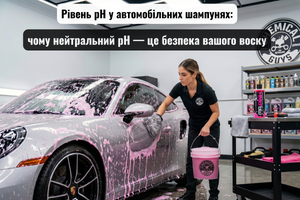
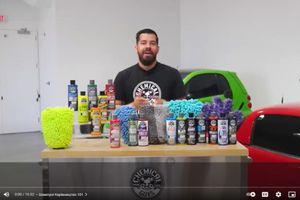
Step 1. Proper Two-Bucket Wash Never try to wipe off water spots with a dry towel. This will cause scratches. First, thoroughly wash the car with a high-quality shampoo (e.g., Chemical Guys Citrus Wash & Gloss) to remove all surface dirt and dust.
Step 2. Using a Specialized Cleaner For Stage 1 and Stage 2 spots, regular shampoo won't help — you need a chemical reaction to break down the minerals.
-
Use gels or sprays designed to remove mineral deposits, such as Heavy Duty Water Spot Remover. Important: This product is safe to use on clear coat (paintwork) and glass, but it strictly MUST NOT be applied to mirrors!
-
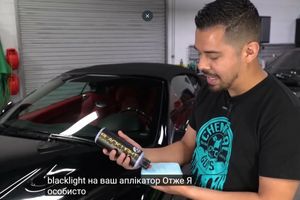
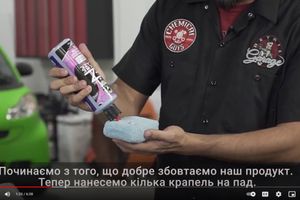
Apply the product to a microfiber applicator.
-
Gently rub it into the affected area (work in small sections, avoiding direct sunlight).
-
Neutralize the residue: wipe with a damp microfiber towel or quickly rinse with water.
Step 3. Detailing Clay (if necessary) If the paintwork still feels rough after chemical cleaning, use a synthetic clay (Clay Bar) along with a lubricant. It will pull out any minerals stuck in the pores of the clear coat.
Step 4. Polishing (for Stage 3) If the spots have already "eaten" into the clear coat and left craters, the only remaining solution is machine polishing using appropriate compounds and pads to restore a perfectly smooth surface.
How to prevent water spots in the future
The best treatment is prevention. To make water bead up perfectly and roll off quickly, minimizing the risk of spotting, you must protect the surface.
In professional detailing, protective layers are applied in a strict sequence (or a ceramic coating is chosen as a high-tech alternative):
-
Ceramic: The most advanced and durable type of protection. Applied to prepped paint, it forms a super-hard crystalline barrier. It provides maximum hydrophobic effects and chemical resistance. There are also hybrid formulas combining wax and ceramic, offering the easy application of a wax with the durability of a ceramic coating.
-
Glaze: Fills in micro-scratches, nourishes the paint, and creates a deep, "wet" gloss.
-
Sealant: Applied over the glaze. This synthetic polymer compound creates a strong barrier and provides long-lasting protection against UV rays and harsh environments.
-
Wax: The final layer. Carnauba or synthetic wax seals the "layer cake", ensuring maximum water beading, making water literally fly off the car.
Also, never forget to dry your car completely after washing, using dedicated absorbent microfiber towels and quick detailers as drying aids.
FAQ (Frequently Asked Questions)
Can I remove water spots with regular white vinegar?
While household vinegar can break down light surface spots, it lacks lubricating properties, can damage rubber weatherstripping, and dry out plastics. Professional detailing products are safe for all exterior materials.
Are water spot removers safe for glass?
Yes, most professional Water Spot Removers work perfectly on glass, restoring ideal clarity without streaks. However, as noted earlier, they must not be used on mirrors, and you should avoid letting the product dry on the surface.
Does a water spot remover strip protective coatings (wax or sealant)?
Yes. Chemical formulas capable of dissolving mineral deposits will usually dissolve organic protective layers as well. After removing the spots, you will need to reapply your protection.